Wednesday, June 17, 2020

Supporting Families and Communities as a Professional

This past week I have been preparing a Family Resource plan for my case study family in my Family and Community Relationships class. I have studied and researched different types of resources to help this family know how to help their child with a disability. I have found community, private, national, state, and federal resources. I have learned through this project and by listening to my classmates project, that every family is different which means that they will need different types of resources. I have also learned that since each family is unique with different backgrounds and cultures. Because of this it is important to make sure that the family will not be offended by the resources that have been provided to them. I have also learned that before finding a resource for a family it is important to really get to know the family and their needs. You don't want to find a resource and tell the family about it and have the family tell you that what you found for them is not what they need. Since I got to create my case study family, I was able to know the family very well so all the resources that were found for them, fit their family needs and concerns perfectly.  

Here are some links to two articles and one video about how The Church of Jesus Christ of Latter-day Saints supports families and communities, specifically focusing on helping families who are taking care of family members who have a disability. 
 
Articles: 
Video: 
As I studied these articles and watched the video, one key takeaway that I got was that the best way to support a family with a family member who has a disability, is to just be their friend. Everyone can use another friend especially those individuals who have a disability. Other takeaways was to focus on what individuals with disabilities can do rather than focusing on what they may be unable or struggle doing. A motto of mine is to always look for the positive in every individual and situation. This quote from Elder Uchtdorf sums everything up perfectly, "God does not look on the outward appearance. I believe that He doesn't care one bit if we live in a castle or a cottage, if we are handsome or homely, if we are famous or forgotten...We are important to God...He loves every one of us, even those who are flawed, rejected, awkward, sorrowful, or broken" (Dieter F. Uchtdorf, "The Love of God," Ensign or Liahona, Nov. 2009, 22-23). God is our greatest support and cheerleader. 

Higher Wider Deeper Project Update
What do Registered Behavior Technicians do? 
A sample job description would include being able to work in clinical settings, providing instruction in behavioral protocols, providing behavioral interventions at home, in the community, and at school. Use ABA (Applied Behavior Analysis) techniques and interventions to teach communication, social, daily living skills, and to reduce problematic behaviors and replace with more appropriate behaviors in all settings. The RBT will be under the direct supervision of the applied behavior analyst supervisor in all interventions and data collection trials.    

What are some needed skills and abilities? These are not all the needed skills and abilities but they are some of the most important that I found that I thought were important. To view more skills and abilities, follow the links below. 
  • Time management skills. 
  • Manage multiple tasks at once.
  • Excellent written and verbal communication skills.
  • Ability to develop and maintain relationships with clients, supervisors, peers, and community members.
  • Maintain client confidentiality and adheres to HIPPA laws.
  • Must maintain a professional appearance.
  • Must be able to sit or stand for long periods of time.
  • Must be able to lift up to 50 lbs. and lift and carry clients with adaptive equipment. 
  • Provide direct student instruction and assist staff with implementation. 
  • Perform other tasks as assigned.  
Sources:


Friday, June 12, 2020

40 hour RBT Training, Exams, Competency Assessments, Oh My!

For all of those who have been following me on this journey of researching how to become a behavioral interventionist, thank you. 

Now that you know what RBT is and that there is a 40 hour training and two different exams and assessments to take to become an RBT. But do you know where you take that 40 hour training from or where to go to take the RBT exam and competency assessment? Never fear! Keep reading!

Where can I take the 40 hour training from?
The training is available online. See this link for a list of colleges, universities, and other programs that offer the 40 hour training online: 

See this link for a list of state agencies that offer the 40 hour training in person: 

Where do I need to go to take the training exam and competency assessment? 
Because of COVID-19, you can temporarily take the online proctored test through Pearson VUE's online system called, OnVUE while the in person testing centers are closed. This means that you could take the RBT training exam from any location, as long as you had access to the internet. The competency assessment is done in person with a qualified assessor, who is BACB certified and who has completed the 8 hour supervision training. 

Sources: 

Friday, June 5, 2020

What is Board Certified Behavior Analysis (BCBA)?

HWD Project Update: 
What is BCBA?
BCBA stands for Board Certified Behavior Analysis who are trained in behavior analysis and who can supervise Registered Behavior Technicians. The requirements to become a BCBA include: 
  • Earn a graduate degree in either behavior analysis, psychology, or education. 
  • Gain experience through practicums or fieldwork. 
  • Pass the national certification exam. 
Sounds easy enough, right? Well it's not. Becoming a BCBA takes a lot of work, from earning another degree to getting enough hours of field experience. But thankfully there are a lot of universities available that offer this program. And the best part is that you can get your masters degree in behavior analysis online as well. Once you have your certification, it is your responsibility to keep it updated, which means that you have to renew it every two years. I have never planned on getting another degree, especially a masters degree, but if I did I would probably do it to become a BCBA.

How does this relate to RBT?
You might be asking yourself, "If Anna is doing her project on become a Registered Behavior Technician (RBT), what does Board Certified Behavior Analysis (BCBA) have to do with her project?". Good question! I will tell you. Knowing about BCBA is good to know in case I want to become one and move up the ladder of working in the behavior analysis world. I could go from an employee (RBT) to employer (BCBA).  

Sources:

Friday, May 29, 2020

The Grief Cycle

This week in my Family and Community Relationships class, we talked about the Grief Cycle. I know this is a tough subject for some individuals, so if you want to stop reading go ahead, I will not be offended. For the brave individuals who read on, buckle up and grab some tissues. 

We started the class with defining grief. Out of three very similar definitions, I thought this was the most appropriate definition. Grief is the response to loss...to which a bond or affection was formed to someone or something. Did you read that? According to this definition, grief is how we react when someone passes away or something has been taken away from us. Some examples could be, getting passed up for a promotion, losing an animal, losing a job, home, family member, losing a dream, etc. Grief is individualized and specific to that individual and circumstance. It is not racist or selective so it comes to everyone. We will all experience grief at one point or another in our lives. It is inescapable.

So why would it be important for me, as a future professional, to understand the Grief Cycle? The biggest reason is so I can help support and emphasize with the families I will be working with. Finding out that your child has a disability is a hard thing to understand and comprehend. There are a lot of emotions, questions, worries, stress and self-doubt that tag along with this realization. I need to be aware of these things so I can be there for the families to offer support and resources for them as they start down this new and different road. They will be looking to me for all the answers so I need to be prepared and well informed to help them with this new adventure. 

HWD Project Update: 
This week I have been researching the benefits of becoming a Registered Behavior Technician. Some of these benefits include: 
  • Increased knowledge of ABA fundamentals to promote socially acceptable behaviors. 
  • Families will be more convinced of your skills and how you can individually help them. 
  • Application of behavioral interventions in multiple settings/environments. 
  • Job openings and positions are constantly growing. 
Stay tuned for next week's topic on "What is BACB and how does it relate to RBT"?


References

Thursday, May 21, 2020

Registered Behavior Technician Training

Like myself, you might be wondering "what is this RBT training that Anna mentioned last week in her blog?" Have no fear, this week I will tell you all you ever need (or wanted) to know about what the RBT training is and why it is important for me.

What is RBT training?
RBT stands for Registered Behavior Technician. It is a 40 hour training that individual must complete within 6 months/180 days in order to become a Registered Behavior Technician. After completing the 40 hour training, you then have to take and pass the competency assessment and the RBT exam. The application fee is $50 and it costs $45 to take the exam.

Why is it important?
This training helps professional and educators learn evidence-based practices in Applied Behavior Analysis (ABA) to help families develop strategies to implement with their family members who struggle with developmental behavior challenges. Not only is it cool to add RBT to the end of your title, but it also allows you to work with students with severe disabilities and in these other settings, residential group homes, nurses, case managers, administrators, and health care facilities. The job opportunities are endless. Some responsibilities that an RBT might do include, assisting with conducting behavior reduction, working on social skills, creating notes from each session, collecting data and training their clients' caregivers. All of these responsibilities are done under the direction of a Board Certified Behavior Analyst (BCBA). 

References

  1. https://www.onlinerbttraining.com/?gclid=Cj0KCQjwzZj2BRDVARIsABs3l9IEPqZZOwkEImvRnByWU_PeUDSIhFvH8ZVG_l2GS9_7i2Qfbu5XL9waArBZEALw_wcB
  2. https://autismpartnershipfoundation.org/courses/rbt/
  3. https://www.bacb.com/rbt/
  4. https://www.appliedbehavioranalysisprograms.com/certification/rbt/

Thursday, May 14, 2020

The Family Life Cycle

What is the family life cycle?
The family life cycle is the fourth element in the family systems theory. The stages in the family life cycle are couple, birth and early childhood, childhood, adolescence, adulthood, post-parental, and aging. Each life cycle impacts all members of the family, individually and as a family. For example, in my family there are individuals in the adolescence and adulthood stage, with each family member at different points in these stages. These two stages in my family connect each member together because we have to interact and function in two very different stages. We have to learn how to balance our family life and the relationships between family members in these stages individually and as a family. As I have learned in my Family and Community Relationships class, whatever happens to one family member happens to all family members. The family unit feels the actions or choices of one family member. This is especially true if one of the family members has a disability.

What is the grief cycle and how can I help families as they grieve? 
As I have learned about the elements of the family systems theory, I have also learned about the grief cycle that impact how a family functions and interacts. The stages of the grief cycle are shock, denial, guilt and anger, shame, depression, and acceptance. I have seen these stages in real life as a family learns that one of their children has a disability. It is very hard for the whole family, but as a future educator who will be working with students with disabilities, it will be part of my job to help the families of my students through this grief cycle. A few things I have learned so far include being optimistic and having hope for the future of the child with a disability helps parents and family members. Another includes having open communication. Communication with the family is key because this family has entered uncharted territory and it is going to be my job and responsibility to guide them safely through this new and exciting territory. But most importantly, the best thing I can do for a family while they are grieving is to be a patient, kind listening ear.   

Update on HWD (Higher, Wider, Deeper) project:
This week I learned that there are some psychology classes that I could take while still at BYU-Idaho. I have also found out that to become a behavioral interventionist, there is a 40 hour RBT (Registered Behavior Technician) training that I will also have to complete.


Thursday, May 7, 2020

The Family Systems Theory

This week in my Family and Community Relationships class, we have learned about the family systems theory. This theory says that families are a systems and that whatever happens to one of the family members happens to all of them. This also brought home to me that each family member is an individual and should be treated as such. As a future educator it is vital for me to know each of my students and their families individually. Each student will have a different family dynamic that I will need to work with and respect. Learning about this theory has helped me to see how different families interact with each other, what types of relationships interweave in the family, and how the family as a whole and as separate parts work together. 

We also talked about what the definition of a family is. Is it people who consider themselves a family and perform typical family functions, not related by blood or marriage? Is it a husband, wife and children? Or is it two or more people who are related by birth, marriage or adopting residing together? Whatever your definition of a family may be, I know that I will need to show respect to my students and their family, regardless of what their family may look like. Other aspects that have an influence on what a family looks like includes size and form, mentioned earlier, cultural background, socioeconomic status, and geographic location. All of these things define what a family is.

Knowing these things will help be to become a better educator because I will respect and not judge. I will recognize strengths and not weaknesses. And I will know that families and their culture are constantly in motion so I should not take one picture of the family and instantly know everything about them.   


Higher, Wider, Deeper Project
For my HWD project, I have decided to learn all I can about how to become a behavioral interventionist. I chose this topic because I have really enjoyed learning about behaviors and strategies I can use to help students with their behaviors. I also chose this topic because I also like working with students individually. This helps me to get to know them individually and I can plan specific strategies that will help them inside and outside of the classroom. With the information I gather, I hope to be able to start down the path of becoming a behavioral interventionist before I graduate from BYU-Idaho.


Wednesday, April 29, 2020

ADA, IDEA, Section 504, and ESSA


What is ADA?
The Americans with Disabilities Act (ADA) is a civil rights law that prohibits discrimination against individual with disabilities in ALL areas of public life. This includes jobs, schools, transportation and all public and private places that are open to the general public. The purpose of this law was to give individuals with disabilities access to employment opportunities, public services on a state and local government level, public accommodations and services, and telecommunications. The two key principles of this law include protection from discrimination and general access.

What is IDEA?
The Individuals with Disabilities Education Act (IDEA) provides all students with a free and appropriate public education (FAPE) regardless if they have a disability or not. Part B services under IDEA are available to children with disabilities from age 3-21. Part C services under IDEA are available for children from birth to 2 years 11 months. To be eligible for services under IDEA, the child must have one of the thirteen specified disabilities mentioned in the law. 

What is Section 504?
Section 504 is just one section in the Rehabilitation Act which is a civil rights law. This section covers all children who are not covered and protected under IDEA. In the school setting, students would be eligible for a 504 plan that offers accommodations to provide the needed extra support in the general education classroom, if they are not eligible for services under IDEA. The Americans with Disabilities Act (ADA) expanded and broadened the rights under Section 504 to prohibit discrimination for individuals in all agencies and businesses.

What is ESSA?
The Every Student Succeeds Act (ESSA) replaced the No Child Left Behind Act (NCLB). This is a main education law that was created to provide every student in every state with a quality education by holding each states more responsible for how they were educating their students. 

Why is knowing and understanding these laws important when working with children, students, and families?
As a future special education teacher, I need to know and understand these laws so I provide each of my students with specialized and unique education to meet their individualized needs. As an educator, these laws will impact everything I do in the classroom, talking with administrators or parents of students. Since I will be the expert in my field for the whole school it is up to me to know and understand what these laws are and how they impact my position. I will also need to know and understand these laws to answer questions from parents who are not as familiar with the laws and the rights they have under these laws. 


Wednesday, April 22, 2020

HIPAA and FERPA

Hello again! It has been awhile since I have posted anything on my blog. To recap, I am currently a student at Brigham Young University-Idaho (BYU-I), and will graduate December 2020 with a Bachelor of Science in Special Education.

As a new semester has started this week, I have been asked to share my thoughts on topics I have been learning and studying each week. This week I have studied two important privacy acts known as HIPAA (The Health Insurance Portability and Accountability Act) and FERPA (The Family Educational Rights and Privacy Act). These are some of the laws that many have heard about or are very familiar with if you work in a medical or educational field.

The question posed this week was, "Why is knowing and understanding these laws important when working with children, students and families?".

Both of these laws have to deal with the privacy, access and security of either medical or educational records. As a future educator, it is very important for me to know and understand these laws because I will be working with children of all ages with different disabilities. It is important for me to know and understand these laws to make sure that I guard and keep all medical and educational records private and secure so I don't get in trouble and penalized. Not only is it important to do but it is also the law so there is no excuse for not implementing the set procedures in the classroom. Abiding by these laws also increases trust and strengthens the relationship between educators or medical personnel and students, children and their families. Without these laws, I think that people would be more judgmental and discriminatory towards others because they would have access to all their information to laugh at or make fun of. These laws provide that much needed element of privacy and security so individuals can keep their educational and medical records private.  


Wednesday, December 13, 2017

Exceptional Students

What a great semester! I have really grown a lot as a person and as a student. I have learned so many new and interesting things that I am excited to try out in my future classroom.

The most important takeaway from my Exceptional Students class is that we are all children of God and that is made manifest in different school practices. I have gained a greater appreciation for how much patience and sacrifice teachers give to their students. I have been able to reflect on my own teachers and the qualities that they possess that I want to have. I am reminded that each student is different in many ways and it is my privilege to teach them.


Saturday, December 9, 2017

Student Behaviors and Visual Impairments

This week has been a crazy and extremely busy one. To sum it up...it is finals week. It has been hard but it has also been very rewarding. This past week I have learned many different strategies on how to help students manage their behaviors in the classroom. There are also some things that teachers can do to help their students.

One strategy that I think is important to use is positive reinforcement. This can help a student to keep them from displaying inappropriate behavior. This can also help to let the student know that they are loved and valued. I also think that this strategy is a good self-esteem booster.

Also during this week, I was able to complete the last simulation for this class. I had to wear different glasses to experience how it would be to have a visual impairment. It seemed quite easy as first but once I got started my perspective quickly changed. I got frustrated very easily because I couldn't see very clearly. My perception was very different. At one time I almost dropped a cup full of water because I couldn't quite tell where it was. This whole experience was very difficult but it made me more grateful for the eyes that I have and it allowed me to experience what it feels like for someone who does have a visual impairment. This will help me to be able to meet the needs of students with visual impairments in my future classroom.


Friday, December 1, 2017

How to Evaluate Student Learning

In my Exceptional Students class this week, I learned about a few different ways to evaluate student learning. The most common way to evaluate student learning is through testing. This will work for some students but for others it doesn't work as well.

Another way to evaluate student learning is through performance-based assessments. This type of assessment provides the student with the opportunity to demonstrate their mastery of a skill through the performance of doing a task. This task could be putting together a puzzle, growing a plant, or being able to match the word of an object to the picture.

This has really helped me to see how I can fairly evaluate the learning of my students. I will definitely be applying and using these two methods of evaluation in my future classroom.

I also completed another stimulation for this class that involved asking some questions to different people without using words that contained the letters "l" and "n". It was very hard to talk without using these letters. I had to really think and concentrate on what words I was saying. It also took a lot longer to ask my whole question. Through this experience I have realized that there are many words that I use all the time that contain these two letters. 


Thursday, November 16, 2017

How to Differentiate Instruction in the Classroom

This week I was able to learn about how to differentiate instruction in the classroom to meet the different needs of the students. This lesson made me really appreciate all of the hard work that teachers, especially special education teachers, do to make sure that all of the students in their class are learning the lesson content.

Here are some suggestions that I found to be very helpful that I am going to apply to my future classroom:
  • introduce new content and/or skills at a slow rate
  • model the assignments so the students know what is expected of them
  • provide lots of opportunities for practice and review
  • create simple study guides, concept maps and diagrams
  • use cue words and definitions or help with memory and retention
  • give instructions orally and have them also written down for easy access

I believe that by implementing these suggestions I will be able to help each one of my students to succeed in the classroom and throughout the rest of their lives.


Saturday, November 11, 2017

Looking Past the Phyiscal Disabilities

This week my eyes have been opened to many new and insightful things. It has been a crazy week with a lot going on but I have managed to get everything done that I need to get done.

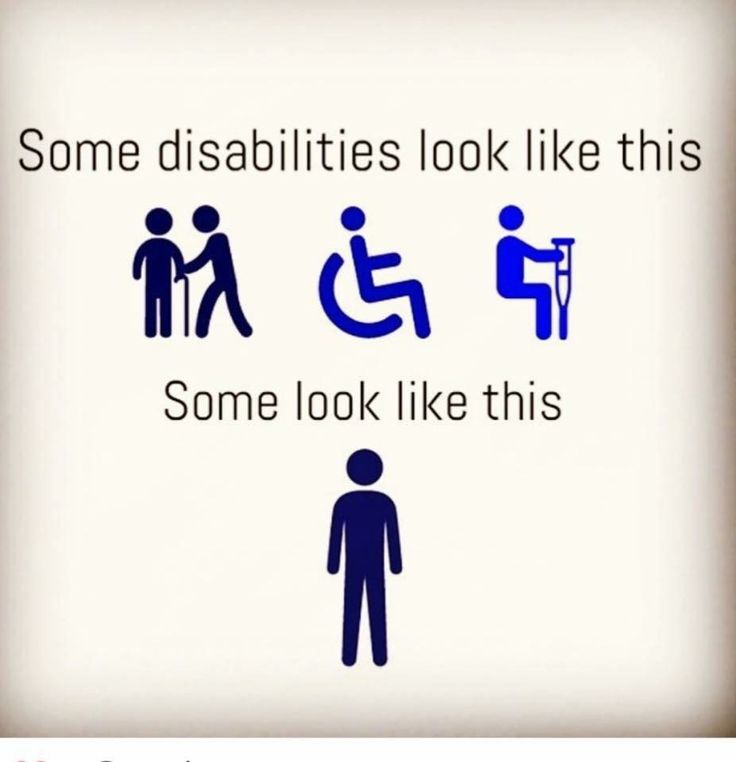
The first eye opener is that I realized that the students in my future classroom might not have physical or identifying disabilities. I don't know why I never realized this before this week, but somehow it happened. When I think of my future classroom as a Special Education teacher, I think of students in wheelchairs, students who have limited use of their limbs, or students who are unable to talk and/or communicate. My view changed because I was able to learn that not all students who have a disability are in wheelchairs, many times their disability is not seen. What a mind blowing week this has been for me!

The second eye opener that I experienced this week is that I got the opportunity to spend a few hours in a wheelchair. I had certain tasks that I had to complete while in the wheelchair. It was very difficult. I could not go upstairs, I could not reach anything on the top shelf, and it was very difficult to maneuver the wheelchair out of tight corners. I gained new insights into what the world looks like from a wheelchair and a greater appreciation for my brother Jacob, who is in a wheelchair. His life is hard because of all of the things that he cannot do, due to being in a wheelchair. I was truly humbled by this assignment and am grateful for all of the things that my body can do.


Friday, November 3, 2017

Inclusive Classroom: What it Takes

This week I was able to learn about the INCLUDE strategy and how to implement it in the classroom. As I was reading I thought that this topic went really well with how to turn your classroom into an inclusive classroom. Here are the steps:
  • Establish a sense of community in the classroom
  • The classroom structure is well organized
  • There are values taught in the classroom
  • Each student is fairly evaluated in their school performance
  • The rules of the classroom make sense to each student. 

The INCLUDE strategy can be described as: a strategy to help differentiate instruction for students with special needs in the general education classroom. By using this strategy, teachers are able to make sure that all of their students are learning and expanding their knowledge in their classroom. I believe that if teachers will create an inclusive classroom than the INCLUDE strategy will just naturally follow. 

For more details and information regarding the INCLUDE strategy see the graphic below.  


Friday, October 27, 2017

How to Assess the Needs of a Student

This week I learned about all of the different kinds of assessments that are a part of the public school system. These assessments are used to measure certain levels of performance in different school subjects. All students are required to take these assessments but there are certain accommodations for students with disabilities. These accommodations include: extended time, frequent breaks, take the test in the special education room instead of the general education classroom, change the response and presentation format of the test so the student can understand.  *please see the image below for more details about assessments.

Through these different assessments and tests teachers are able to determine the needs of a student. They will be able to know how to adapt the curriculum to help the student learn. They will know what the learning style and preference is for that student so they can change and adapt their lesson plans to benefit the student.

This reminds me of FAPE, which stands for Free Appropriate Public Education. I think this is a great example of how to make the curriculum appropriate for all students.


Friday, October 20, 2017

The Power of Teamwork

This week in my Exceptional Students class I learned about collaboration and teamwork. There are a lot of people that have to work together to provide services to just one student. To help me connect the dots of what collaboration is I created a concept map, which I have included down below, for your reference.

I was able to put what I had learned from the lesson this week as I worked on two different group projects. It was really interesting to see how teamwork and collaboration fit and work together in this setting. Communication, as always, is extremely important! This is key for everyone to realize and be able to put into practice.


Friday, October 13, 2017

Procedures and Services in Special Education

Do you know how many people are involved in making special education happen in the school?  Some of the people involved include:
  • general education teacher
  • special education teacher
  • school psychologists
  • speech/language therapists
  • social workers
  • paraprofessionals
  • physical therapists
  • occupational therapists
  • sign language interpreter
All of these professionals and more are involved in making sure that special education is available for all students attending the school.

When I was attending high school I had no idea that all of these professionals worked at my school. I had some interaction with a few of these professionals so I thought that was all that was provided.

I also learned about the process of how students can obtain special services/education. It can be a long process but very rewarding for those students. I think that this is important because it shows that teachers and administrators are concerned about the students in the school and they want the very best for them.

Here is a concept map of everything that I learned this week to help you to connect the dots.

Friday, October 6, 2017

Communication

What a crazy week this has been! It has been full of school, which includes homework and unexpected group assignments, work, and family. But the one thing that has been constant throughout this week has been communication. There has been some good communication and some miscommunication.

This week I was able to learn about the process of creating an IEP (Individualized Education Plan). This is a very complex process because you are trying to meet the needs of the student with disabilities, in regards to their education, while making sure that you are meeting the needs of the parents that they request for their son or daughter. The key to making this process go as smoothly as possible is having good communication between all of the parties involved.  


Friday, September 29, 2017

Education for ALL

This week I was able to take a trip into the past to learn about all of the laws and legislation that brought about education for every child. It was very hard and it took a long time for all children to be able to receive an education. I was surprised to realize that all of this happened not very long ago. I feel like sometimes we think this great movement took place a long time ago, but in reality it was not that long ago. 

I am extremely grateful for all of the brave men and women that stood up and decided that something needed to be changed in the public school system to include all children. Because of this great movement my brother, who is in a wheelchair, was able to attend high school and who is now attending a university to further his education. Along with continuing his education, he has a job working at the local Wal-Mart.

He is able to do both of these things because of the ADA act. He has found a new purpose to his life and he feels like he can actually do something productive with his life. If he had lived 50+ years ago, he would not be able to do these things. What a huge impact this has made in his life and in the lives of others.